Impact of the Proposed ALTO High-Speed Rail Network on Ontario Prescribed Snowmobile Trails
The Ontario Federation of Snowmobile Clubs (OFSC) appreciates the opportunity to participate in the public consultation on a proposed high-speed rail network in the Province of Ontario. The OFSC opposes this project as currently proposed, due to its impact on riders, communities, local businesses, landowners, and Ontario’s winter economy.
Background
The OFSC is a not-for-profit organization that provides leadership to member organizations to enable exceptional snowmobile trails and rider experiences throughout Ontario.
The OFSC is a service delivery partner on behalf of the Ministry of Transportation of Ontario (MTO). The OFSC, through 179 community-based snowmobile clubs, provides accessibility to, and maintenance of, 30,000 kilometres of recreational prescribed snowmobile trails, connecting all corners of Ontario. This is accomplished and funded through the sale of Snowmobile Trail Permits and through the signing of thousands of Land Use Agreements to provide access.
Areas of Concern
Impact on Community-Based Snowmobile Clubs
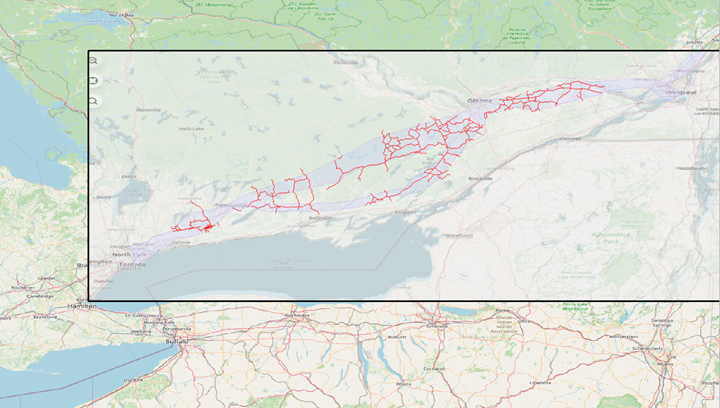
The OFSC Prescribed Trail Network is the second largest in North America. The two proposed high-speed train network routes would severely impact the OFSC Prescribed Trail Network, essentially disconnecting it. It is estimated that the current proposed routes affected would negatively impact up to 2,200km of snowmobile trails and 19 volunteer-based snowmobile clubs across four OFSC Districts.
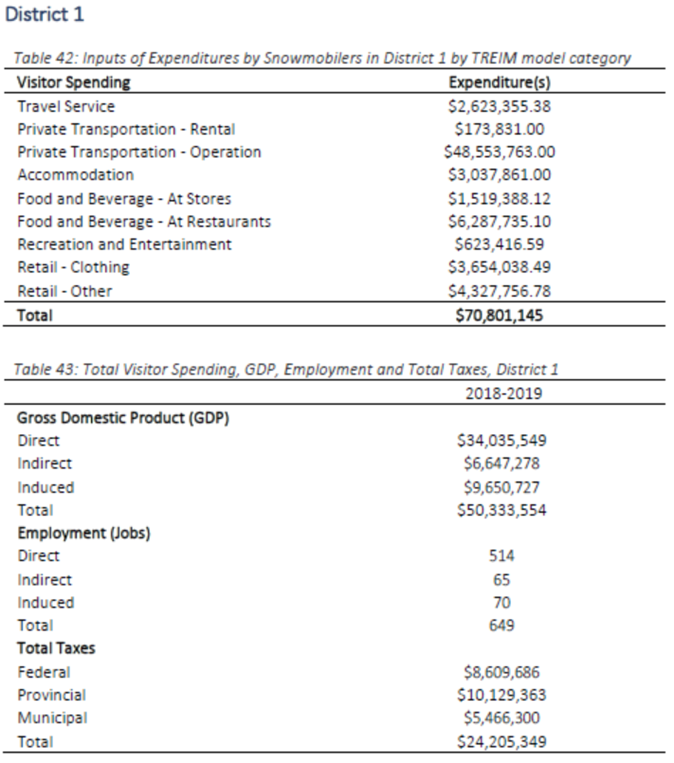
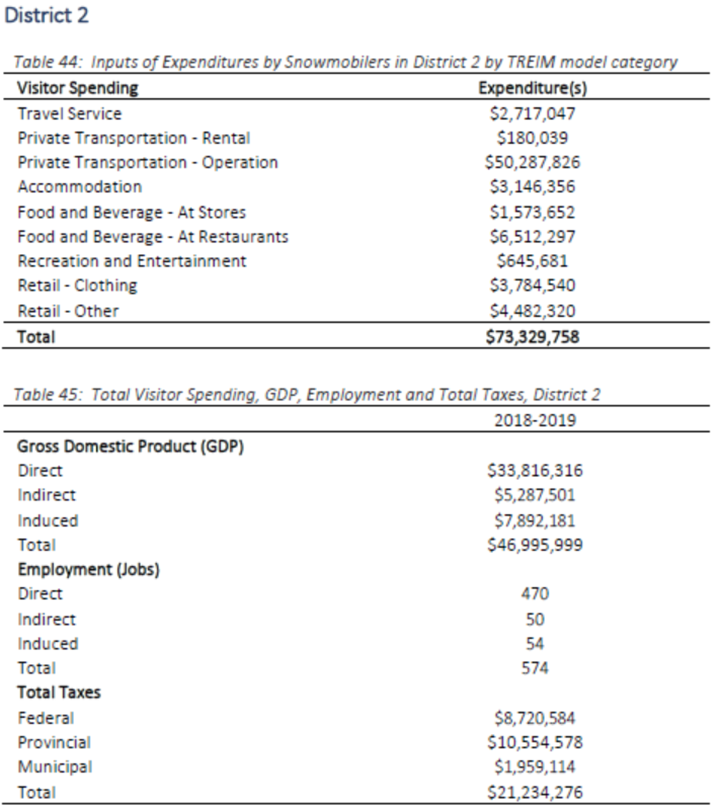
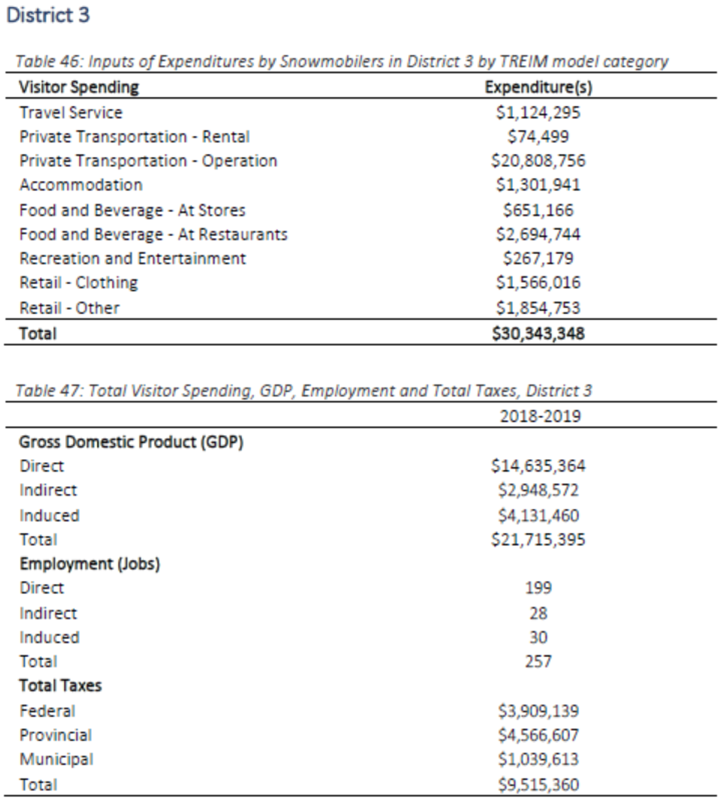
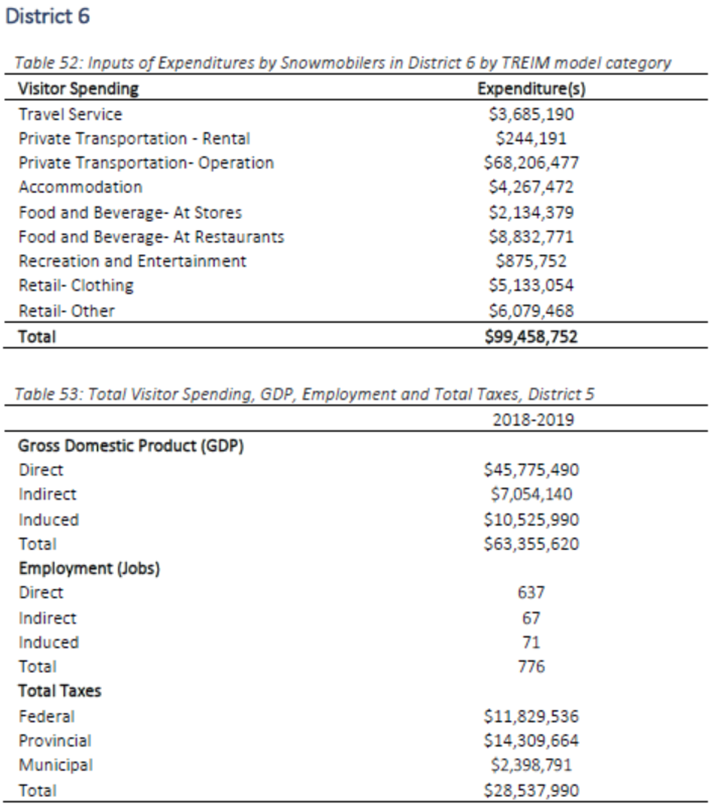
Organized snowmobiling is more than just a hobby; it is an economic juggernaut that creates a tremendous positive economic impact in Ontario. A recent study found snowmobiling-related economic activities result in an economic impact of between $3 billion and $6 billion annually. OFSC snowmobile trail riders contribute $1.48 billion in expenditure and support 9,307 full-time jobs. The total amount of taxes generated by OFSC snowmobile trails is estimated to be $538 million. These proposed routes threaten to sever arterial north/south trail connections and the economic activity that comes with it. A breakdown by affected Club/District is provided below and in the Appendix.
| District | Club | KM |
| 1 | Athens & District Snowmobile Club | 39.97 |
| Beautiful Eastern Association of Snowmobile Trails | 280.81 | |
| Carleton Regional Snowmobile Club | 126.06 | |
| Eastern Ontario Snowmobile Club | 315.66 | |
| Glengarry Snowmobile Club | 21.40 | |
| Kemptville Snowmobile Klub | 4.88 | |
| Lennox & Addington Ridge Runners | 116.96 | |
| Osgoode Carleton Snowmobile Trail Club | 8.92 | |
| Rideau Ridge Riders | 137.13 | |
| Rideau Snowmobile Club | 132.00 | |
| District 1 Total | 1183.79 | |
| 2 | Havelock & District Snowmobile Club | 77.45 |
| Mazinaw Powerline Snowmobile Club | 30.65 | |
| District 2 Total | 108.10 | |
| 3 | Centre Hastings Snowmobile Club | 111.31 |
| Ganaraska Snowmobile Club | 131.10 | |
| Long Sault Ridge Runners | 49.94 | |
| Percy Boom River Rats | 124.55 | |
| Port Perry Snowmobile Club | 42.61 | |
| Rice Lake Snow Drifters | 74.39 | |
| District 3 Total | 533.89 | |
| 6 | Snow Road Snowmobile Club | 371.01 |
| District 6 Total | 371.01 | |
| Grand Total | 2196.79 |
Over/Underpasses
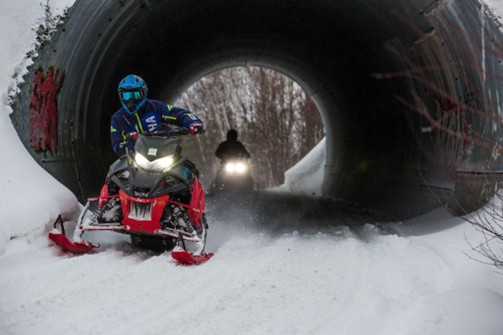
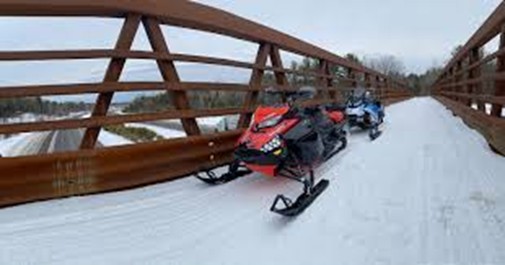
If this project is approved, the OFSC will require dozens of over/underpasses to retain connectivity. With proposed speeds of “300km/h or more” and 20-30 trains travelling each way per day, at-grade level crossings would not be feasible. Both options would need to be wide enough to accommodate two-way snowmobile traffic, as well as provide enough overhead clearance to permit access for industrial snow groomers. Importantly, both would have to be engineered to accommodate the significant loads brought about by snow, snowmobiles, and industrial grooming equipment. Said simply, the OFSC is not in a financial position to cover the costs of this infrastructure.
Legacy Rail Lines & Utility Corridors
Many OFSC Prescribed Trails use legacy rail lines and utility corridors as part of the snowmobile trail network; these lands have long provided powersport access to communities. If ALTO’s intent is to expropriate rail lines and utility corridors, then trail re-routes are required, and this can be a costly and lengthy process. In any scenario, expropriating these lines will result in a tangible and immediate loss to the OFSC trail network and the local economy.
Conclusion
Without coordination and consultation to retain snowmobile trail connectivity, the proposed high-speed train network would critically damage organized snowmobiling in Ontario. Based on the current proposed routes, your stated objective of “bringing our lives and cities closer together” can only be achieved by severing communities that rely on snowmobiling to generate a winter economy. These communities become collateral damage and represent but a momentary blur on your 300 KM/H journey. Given their geographic location relative to stations/stops, they will receive no value, stimulus, or benefit. Irrespective of what route is chosen, it is critical that your planning includes retaining snowmobile trail connectivity.
We would be happy to discuss this matter further.
Sincerely,
Ryan J. Eickmeier
Chief Executive Officer
Appendix A: Economic Impact of OFSC Districts Affected by Proposed Routes